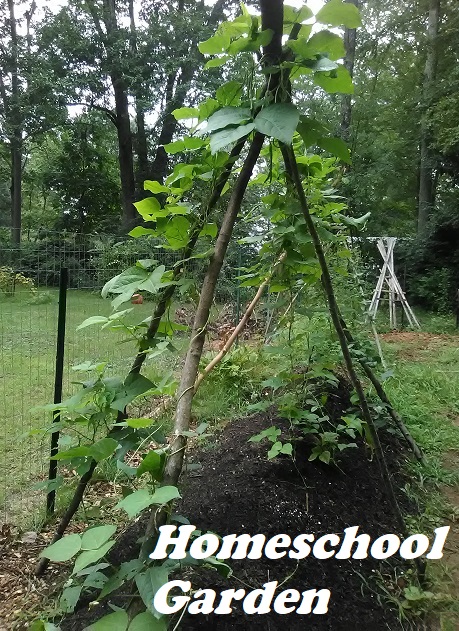
Last year, I planted a vegetable garden. It was only my second year doing this. I grew up in the city and don’t know much about gardening. However, while homeschooling my son, we learned about sprouting seeds and the garden seemed like the next logical step.
In our family, we try to live pretty naturally. I cook from scratch and avoid artificial ingredients. So, if I was going to grow food for us, I wanted it to be as organic as possible. I saved seed from plants I had grown the year before, used our compost, fertilized with manure and Epsom salts, deterred pests with crushed eggshells and cups of beer planted around the raised beds.
Every morning, I went out, watered my plants, pulled off any powdery mildew-infected leaves, picked anything that was ripe, tied or propped up anything that needed it. I said to my husband, “This is like having a baby, except that it doesn’t wake me up at night!”
However, as I looked at the gardens of my neighbors, I sometimes got a little envious. I had put so much tender care into my little plot of land, and theirs had grown so much bigger, faster, and yielded so much more food already. Sometimes, it was discouraging and made me wonder if it was worth it to do things the way that I had chosen to do them.
That thought process took me right back to parenting again. When my youngest was born, I wanted to breastfeed her, as I had with my other children. The fact that she was premature and had an immature immune system was an additional motivating factor. Luckily, I knew ahead of time that she’d be delivered early and had read up on strategies for nursing a premature baby. It was NOT easy, though. She was too small and weak to nurse directly and had to be tube-fed the milk that I was pumping for her, every 2 to 3 hours, around the clock. I set an alarm to wake myself at night and delivered all of the little, carefully labeled bottles to the neonatal intensive care unit every morning.
One night, I stayed overnight at the NICU so I could spend extra time with my baby, trying to teach her to nurse. As I attempted to get some sleep, I overheard the nurse who was responsible for my daughter that night speaking with another nurse, mocking my attempts to breastfeed a preemie, which she presumed would fail. It was devastating. I was just trying to offer my child what I thought was the best that I could and frankly, one of the only things I could do to nurture her while she was still in the hospital. Who could find fault with that?
After a month in the hospital, my baby returned home on a bottle. I spent three more months on the roller coaster of pumping milk around the clock while also trying to help her get the hang of nursing. I made more than one tearful phone call to the lactation consultant, and eventually found myself grumbling over having to stop everything to pump throughout the day, while keeping a newborn and toddler happy at the same time. At times, I thought how much easier it would be just to give up and turn to formula instead. It wouldn’t have been the end of the world. I had made a choice to breastfeed, though, because it was what I felt was best for her. No one was forcing me to, so what right did I have to complain?
It wasn’t long after this realization that she finally got the hang of nursing, and rejected the bottle feedings for good.
I can draw the same comparison to homeschooling. When I was considering taking on the challenge, a homeschool veteran that I knew gave me the wise advice that it was something that God had to call you to. I prayerfully considered this and determined that He was. Over the last three years, I have found a lot of joy and blessing in the experience of teaching my children. It has inspired me to recognize the many teachable moments that present themselves throughout the day, even when we aren’t “schooling.” It has challenged me and helped me to grow.
It isn’t easy, though. It requires effort and sacrifice. Sometimes, it is very frustrating and my patience wears thin. It can be tempting to look at the garden across the street, with the “miracle” grown, heavy-laden plants and think how much easier it would be to take that path and how much better the short-term results appear to be.
Then, God reminds me, “If I’ve called you to it, I’ll equip you to do it. You made a free will choice to follow the path I set before you. Are you going to trust Me or grumble about it?” That’s when He reminds me of some things.
- Faster isn’t necessarily better. Three of my four children attended preschool, but I kept the youngest home with me, because the cost had become too high. When I began kindergarten with her, I discovered that she was farther ahead in some areas than her siblings had been at the same age. Beginning school two years later had not hurt her at all.
- Anything that is worth doing will never be easy. When I first got saved and the realization hit me that I was supposed to surrender my love life to God and remain pure until He brought me a husband, I didn’t think it would be easy, but I never comprehended how challenging it would be. Not only was there physical temptation to combat, but the fear that no one would ever want to marry me. Looking back now, the only regrets that I have from that time are the moments when I failed to be strong and compromised in some way, and there were always ramifications from those choices. The times when I walked in complete purity were worth the sacrifice.
- We have to take responsibility for what God has entrusted us with. This won’t be the same for all of us. Some parents have obstacles that prevent breastfeeding, homeschooling, or growing their own food. Some people just aren’t called to those things, or perhaps aren’t in this particular season of their lives. We aren’t all meant to walk the same exact path at the same time. We should still strive to be faithful in whatever circumstance we are in presently. No matter who is teaching our child to read and write, we still have a responsibility to teach them about Jesus, to treat others as they would like to be treated, and to be grateful for the blessings they have received.
So, when I am tempted to look upon the garden across the street with envy, I remember these things. My garden may take longer to grow and produce less impressive-looking food, but it will nurture the bodies of my family just as well. So, I can rest easy, knowing that I have done it the way that I was called to, instead of taking a shortcut that I would have regretted. There is something incredibly satisfying in that.

 Musings from My Garden