Relationship, Obedience & Homeschooling

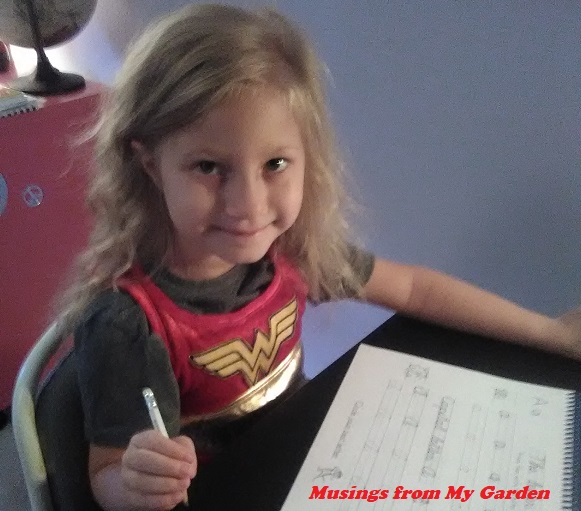
Relationship obedience pic for blog

Recently, as we were waiting for our daughters at dance class, another mom asked if my children had started school yet.  I explained that we had begun our school year, but we homeschool.  In response, she said, “I thought about homeschooling, but in the end, I decided that my relationship with my children would be better if I weren’t their teacher, too.”

A few years ago, a friend of mine who was considering homeschooling her child shared with me her worry that her son wouldn’t listen to her if she tried to teach him, and therefore, not get his school work done.

I cannot judge either one of these concerns.  I understand them well, because I’ve had them myself.  As I’ve prayed through them, though, God has shown me His heart about these things.

Relationships require interaction and time spent together to grow in intimacy, not time apart.  The reason that “absence makes the heart grow fonder” isn’t because you love someone more when you are apart; it is because the less you are together, the less opportunity there is for conflict to develop.  God’s Word shows us that He is very relational.  He is our Abba Father.  Jesus is His son.  The church is called His bride.  How can we model for our children an intimate relationship with God unless we have one with them?

Also, it is very important that we all learn obedience to God.  How do we prepare our children for that responsibility if we haven’t taught them to obey us first?  Personally, I’ve been very frustrated by a stubborn disobedience that has arisen in my 6-year-old lately.  I warn her that there will be consequences if she doesn’t make the right choice in a given situation.  Yet, she continues to push the limits until I end up having to take a privilege away.  Then, the tears flow, as though she didn’t already know that was going to happen.

I don’t want to chasten my children or remove blessings from them.  However, this helps me to realize how God feels about me.  He wants my obedience and for me to listen to His leading, so he can bless me also.  That just confirms to me that I need to stick with it.  My daughter will find it much easier to follow God in the long run if she gets her heart right in this area now.  It also helps me to keep my eyes on Him in my own walk.  If it hurts me this much to punish my child, I can imagine how much more my Father in heaven is grieved by me at times.

If I weren’t home with my children all day, I’d have a lot less time to help them build their characters and encourage their spiritual growth, but it would still be my responsibility, even if someone else was teaching them to read and write.  So, I embrace the challenge, trusting that God will work in their hearts to bring them closer to Him.

“Then I will give them a heart to know Me, that I am the Lord; and they shall be My people, and I will be their God.” – Jeremiah 24:7

 Note:  This post was written for The Old Schoolhouse® Magazine’s Homeschooling with Heart Blog and the intended audience is parents who feel that they have been called to homeschool.

The Specks in History

The Specks in History Graphic 1

A couple of years ago, my husband and I took our children on a field trip to see the Liberty Bell in Philadelphia.  When we exited the building, there was a television monitor outside loudly playing a video disparaging one of the founding fathers.  We hurried the children away from it.  It just felt wrong to me.

With the recent stories in the news about statues being torn down by angry mobs, I’ve given this some more thought.  As a homeschooling parent, it begs the question, “What is the right approach in teaching my children about historical figures?”

I suspect that the reason that there is so much vitriol towards some of these people is because the tendency in the past has been to venerate them and hold them up as examples to our children.  I can understand why that would have happened.  How better to inspire children to use their God-given gifts to the utmost and not settle for mediocrity than to give them an accomplished person to emulate?  The pushback to that in recent generations seems to be to point out their every moral failing, as if to make them pay penance for their fame.

As a Christian, I believe my job is to teach my children to idolize and imitate only one human being – Jesus Christ.  Anyone else, successful or not, is only another sinner just like them.  Even public figures that are generally admired by most of us still have hidden sins, as do we.  No one has attained perfection.

I want to teach my children both by my words and my example to emulate Jesus.  In order to do this, I have to follow His commands.  That includes not attempting to remove the speck from someone else’s eye when I have a plank sticking out of my own eye (Matt. 7:1-5).  It also means that I should not cast the first stone, when I am not without sin myself, and that I should treat others the same way that I want to be treated (John 8:7; Matt.7:12).

I also think that it’s a good idea to provide balance in our history lessons; presenting both what someone may have done that was right versus mistakes that they made.  There has to be a line, though, where I determine what information is useful for them to have and what is just tabloid fodder.  One thing that I find helpful is to take off my 21st century lens for a moment and look through the lens of the time period we are studying.  Every generation has their predominant sins.  There are things that were accepted in the past that appall us, but if the people living in that time were able to look forward to practices that are generally accepted today, they’d find plenty to be appalled with as well.

After I’ve removed and carefully examined the plank that was in my own eye, it makes me a lot more humble and less likely to harshly point out the speck in another’s eye.  If the person is deceased, what can be accomplished by pointing out their failings at all?  In the end, I wouldn’t want my own sins blaring from a TV into the streets of Philadelphia, so I won’t do that to someone else.

“Judge not, that you be not judged.  For with what judgment you judge, you will be judged; and with the measure you use, it will be measured back to you.  And why do you look at the speck in your brother’s eye, but do not consider the plank in your own eye?  Or how can you say to your brother, ‘Let me remove the speck from your eye’; and look, a plank is in your own eye?  Hypocrite!  First remove the plank from your own eye, and then you will see clearly to remove the speck from your brother’s eye.” – Matthew 7:1-5

Awakening – Letting Children Develop at Their Own Pace

lily photo 2

This summer, I discovered something new in our yard – a beautiful, yellow lily with a burgundy center.  In the decade that we’ve lived in this house, it had never bloomed before.  About a week later, a solid yellow lily appeared in another part of the yard.  A friend had given me some flower bulbs about two or three years ago, and I planted some in both of those locations.  After the first summer had come and gone without anything appearing, I’d given up hope on them, but they’d been alive in the earth all along.  My husband thinks they came up now because our neighbor cut some trees down and we are getting more sunlight.  Whatever the case, they apparently needed time and the right conditions to bloom, and this was their year.

Not long after this, another miracle occurred; my son, who is seven, turned to me and said, “Mom, I’ve been noticing something lately.  I know how to read now.”

I’ve been trying to teach him to read for about the same length of time that those bulbs have been underground, and until recently, the fruits of my labor had not seemed very productive.

When I made the decision to homeschool him, a veteran homeschool mom told me, “Don’t worry if he is slow to read.  Several of my children have been, but they all got it eventually.”  I nodded and smiled, thinking that I didn’t need to worry about that.  After all, I could read at age three, and my two older children, who’d gone to school, were reading in first grade.  Why should he be any different?

When we began his phonics instruction in kindergarten, he was making good progress until he actually had to begin blending the isolated sounds that he’d learned into words.  No matter what I tried, he just could not “hear” the blend.  I was set on following the curriculum to the letter, and he was getting frustrated by the amount of practice that was required by each lesson.  By the time that he was able to blend, he had developed a dread for reading and a lack of confidence in his ability, no matter how much I tried to encourage him.  To make matters worse, a friend of mine noticed his inability to read and began to question me about it, periodically suggesting that I ought to put him in public school, which made me feel even more defeated.

When he reached second grade, I knew that I needed to try something different.  Some days we did a lesson out of the phonics book, and on alternate days, we used a vintage reading primer that he enjoyed and felt less intimidated by.  His sister was beginning kindergarten, and she quickly began to catch up to him.  When he realized this, an internal motivation emerged from him not to let her out-do him.  His cooperation improved, but he still needed to sound everything out slowly, letter by letter.

I prayed for a breakthrough and continued to have him practice this summer with some easy readers.  One day, I noticed that he was beginning to finally see what some of the words were on first sight, without having to sound them out.  Now, the day had come when he realized what that meant.  He was finally a reader.

I should have listened to that mom years ago, when she tried to impart some wisdom from her own experience.  Children develop at their own pace.  Rather than wasting time worrying or letting my pride be injured that my child wasn’t doing something at the same time that other children are, I should have just turned my cares over to God and had confidence that my son would bloom when the time was right.  Just like the lilies in my garden, it was a lovely surprise when it happened.

“Consider the lilies of the field, how they grow: they neither toil nor spin; and yet I say to you that even Solomon in all his glory was not arrayed like one of these.  Now if God so clothes the grass of the field, which today is, and tomorrow is thrown into the oven, will He not much more clothe you, O you of little faith?” – Matthew 6:28-30

How We Use “The Ordinary Parent’s Guide to Teaching Reading”

Reading time

I am now in my third year of homeschooling.  My son is in second grade and my daughter is in kindergarten.  I have been using “The Well-Trained Mind” by Susan Wise Bauer and Jessie Wise as my basic guide.  With that in mind, I purchased the text that she suggests, “The Ordinary Parent’s Guide to Teaching Reading” (OPGTR) by Jessie Wise and Sara Buffington to teach phonics to my children.

I began kindergarten with my son right as he was turning five.  We initially followed the scripted lessons in OPGTR to the letter.  In the beginning of the book, where the short vowel and basic consonant sounds were introduced, he participated enthusiastically and my three-year-old joined in.  However, once the book began to introduce sentences for him to read to practice the sounds he had learned, things began to go downhill from there.  Long story short, I ended up spending more time fighting with him to convince him to do the lesson than we actually did on the lesson itself.

pinkk flowers

I still believed in the curriculum.  The scripted way that the lessons are presented makes it easy to use and I like the thorough way that each sound is described.  The problem seemed to be that my son was intimidated by the amount that he was being asked to read.  I consulted some online homeschooling boards for suggestions from other parents and found that others had experienced similar issues with their children.  Some of the ideas that I tried were:

  1. Writing the words or sentences that the child is supposed to read on a chalkboard or whiteboard, word by word or sentence by sentence instead of having him reading right out of the book.
  2. Splitting some of the longer lessons over two or three days.
  3. Eliminating or shortening some of the sentences.
  4. Taking a break from the book for a while and using easy readers for practice in the meantime.

After trying all of these suggestions, we were still trudging our way through the OPGTR at the beginning of second grade, by which time I believed that he should have been finished with it and reading independently.  It was a battle every time the book came out and I tried to sit him down to a reading lesson.  You may think that I should have given up on it by now.  However, when I tested my daughter to see at what point in the book I should start with her, knowing that she had had some exposure to it, I was surprised to discover that she already knew all of her basic consonant and short vowel sounds, meaning that we were able to skip past the first third of the book.  Obviously, it had been beneficial to her, just from listening in on her brother’s lessons.

With that in mind, I finally devised a way to motivate my son to practice reading without a fight but still finish up the curriculum.

  1. We follow the scripted lesson which explains each phonics rule and read the words which utilize the sound.
  2. I read the sentences to him/her, pointing at each word as I say it, and making them follow along with their eyes.
  3. We practice reading sentences in books that he is not intimidated by.
    1. Mainly, we use the McGuffey’s Primer or First Reader (which can be purchased here or downloaded for free here).
    2. Bob Books
    3. Hooked on Phonics readers

As I am embarking on this book anew with my kindergartener, I’ve also taken into account some mistakes that I made the first time around.  Because getting my son to complete a lesson was such a battle, I ended up skipping some of the steps that the book suggests for lack of time.  Now that I am now longer requiring him to read all of the sentences, he is cooperative and we actually have the time to do these things:

  1. The One New and Two Review rule. Basically, this means that you do a quick synopsis of what the child learned in the last two lessons before embarking on the new lesson.
  2. Sight Words. The OPGTR doesn’t encourage sight words as a rule, but introduces them periodically when a word is “disobedient,” meaning that it doesn’t follow the basic phonics rules, or if the word is a common one (like “the”) that cannot be sounded out.  We make a flash card as the book directs us to and then review them several times a week.  My children like to play a game that whoever reads the most sight words first gets a treat.  (This post lists the sight words introduced in the book in order.)

I decided to share what has worked for us because I’ve seen so many parents lament that although they like this curriculum, their children hate it and they have the same battle of wills going on that I did.  If my experience can help someone else to be successful with it, that will make all of the trouble I experienced at first worth it.  On another note, knowing what I know now, I probably would not have started kindergarten with my son until he was six and not put as much pressure on him to read right away.  Research suggests that girls tend to find learning to read easier than boys and many children aren’t ready for formal schooling at five years old.  “The Well-Trained Mind” takes the approach that once a child learns to read, the whole world of learning is open to them.  While I agree with the idea, if pressing the child to read when they are not ready makes them resistant to learning in general, then it does more damage than good.

All in all, I do recommend this book to other homeschooling families, keeping in mind that they may need to use some of the above-mentioned strategies if their child struggles with it.

Note:  I wrote this towards the end of last school year.  Over the summer, I kept having my children practice reading in some easy readers and my son has made significant progress and gained confidence in his ability to read!  I also discovered that The Ordinary Parent’s Guide to Teaching Reading is supposed to lead to a fourth grade reading level once the child has completed it.  I feel that the edition of The Well-Trained Mind that I have was not clear on this.  Knowing that, I feel better about the amount of time it has been taking us to work through the book.

Homeschool Garden

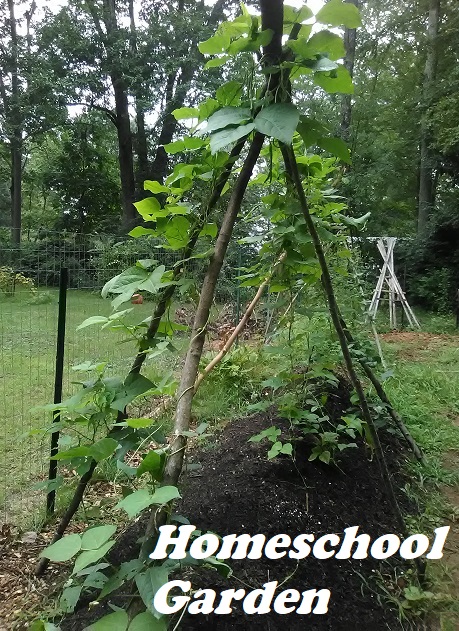
Hugel Culture with text

Last year, I planted a vegetable garden.  It was only my second year doing this.  I grew up in the city and don’t know much about gardening.  However, while homeschooling my son, we learned about sprouting seeds and the garden seemed like the next logical step.

In our family, we try to live pretty naturally.  I cook from scratch and avoid artificial ingredients.  So, if I was going to grow food for us, I wanted it to be as organic as possible.  I saved seed from plants I had grown the year before, used our compost, fertilized with manure and Epsom salts, deterred pests with crushed eggshells and cups of beer planted around the raised beds.

Every morning, I went out, watered my plants, pulled off any powdery mildew-infected leaves, picked anything that was ripe, tied or propped up anything that needed it.  I said to my husband, “This is like having a baby, except that it doesn’t wake me up at night!”

However, as I looked at the gardens of my neighbors, I sometimes got a little envious.  I had put so much tender care into my little plot of land, and theirs had grown so much bigger, faster, and yielded so much more food already.  Sometimes, it was discouraging and made me wonder if it was worth it to do things the way that I had chosen to do them.

That thought process took me right back to parenting again.  When my youngest was born, I wanted to breastfeed her, as I had with my other children.  The fact that she was premature and had an immature immune system was an additional motivating factor.  Luckily, I knew ahead of time that she’d be delivered early and had read up on strategies for nursing a premature baby.  It was NOT easy, though.  She was too small and weak to nurse directly and had to be tube-fed the milk that I was pumping for her, every 2 to 3 hours, around the clock.  I set an alarm to wake myself at night and delivered all of the little, carefully labeled bottles to the neonatal intensive care unit every morning.

One night, I stayed overnight at the NICU so I could spend extra time with my baby, trying to teach her to nurse.  As I attempted to get some sleep, I overheard the nurse who was responsible for my daughter that night speaking with another nurse, mocking my attempts to breastfeed a preemie, which she presumed would fail.  It was devastating.  I was just trying to offer my child what I thought was the best that I could and frankly, one of the only things I could do to nurture her while she was still in the hospital.  Who could find fault with that?

After a month in the hospital, my baby returned home on a bottle.  I spent three more months on the roller coaster of pumping milk around the clock while also trying to help her get the hang of nursing.  I made more than one tearful phone call to the lactation consultant, and eventually found myself grumbling over having to stop everything to pump throughout the day, while keeping a newborn and toddler happy at the same time.  At times, I thought how much easier it would be just to give up and turn to formula instead.  It wouldn’t have been the end of the world.  I had made a choice to breastfeed, though, because it was what I felt was best for her.  No one was forcing me to, so what right did I have to complain?

It wasn’t long after this realization that she finally got the hang of nursing, and rejected the bottle feedings for good.

I can draw the same comparison to homeschooling.  When I was considering taking on the challenge, a homeschool veteran that I knew gave me the wise advice that it was something that God had to call you to.  I prayerfully considered this and determined that He was.  Over the last three years, I have found a lot of joy and blessing in the experience of teaching my children.  It has inspired me to recognize the many teachable moments that present themselves throughout the day, even when we aren’t “schooling.”  It has challenged me and helped me to grow.

It isn’t easy, though.  It requires effort and sacrifice.  Sometimes, it is very frustrating and my patience wears thin.  It can be tempting to look at the garden across the street, with the “miracle” grown, heavy-laden plants and think how much easier it would be to take that path and how much better the short-term results appear to be.

Then, God reminds me, “If I’ve called you to it, I’ll equip you to do it.  You made a free will choice to follow the path I set before you.  Are you going to trust Me or grumble about it?”  That’s when He reminds me of some things.

  1. Faster isn’t necessarily better. Three of my four children attended preschool, but I kept the youngest home with me, because the cost had become too high.  When I began kindergarten with her, I discovered that she was farther ahead in some areas than her siblings had been at the same age.  Beginning school two years later had not hurt her at all.
  2. Anything that is worth doing will never be easy. When I first got saved and the realization hit me that I was supposed to surrender my love life to God and remain pure until He brought me a husband, I didn’t think it would be easy, but I never comprehended how challenging it would be.  Not only was there physical temptation to combat, but the fear that no one would ever want to marry me.  Looking back now, the only regrets that I have from that time are the moments when I failed to be strong and compromised in some way, and there were always ramifications from those choices.  The times when I walked in complete purity were worth the sacrifice.
  3. We have to take responsibility for what God has entrusted us with. This won’t be the same for all of us.  Some parents have obstacles that prevent breastfeeding, homeschooling, or growing their own food.  Some people just aren’t called to those things, or perhaps aren’t in this particular season of their lives.  We aren’t all meant to walk the same exact path at the same time.  We should still strive to be faithful in whatever circumstance we are in presently.  No matter who is teaching our child to read and write, we still have a responsibility to teach them about Jesus, to treat others as they would like to be treated, and to be grateful for the blessings they have received.

So, when I am tempted to look upon the garden across the street with envy, I remember these things.  My garden may take longer to grow and produce less impressive-looking food, but it will nurture the bodies of my family just as well.  So, I can rest easy, knowing that I have done it the way that I was called to, instead of taking a shortcut that I would have regretted.  There is something incredibly satisfying in that.